
How Parks & Recreation Departments Are Cutting Lighting Costs with Smart Controls
Utility bills are one of the largest line items in any parks and recreation budget. Ballfields, courts, and shared facilities often run lighting on manual switches, breakers, or aging time clocks, and that setup quietly drains money every month. For departments managing dozens of sites across a county or city, the waste adds up fast.
Smart lighting controls are changing that. Departments across the country are replacing manual and time clock based systems with remote, cellular controlled lighting management, and the results speak for themselves.
The Real Cost of Manual Lighting Control
Most parks and recreation departments inherited lighting systems built around breakers, keys, or mechanical timers. On paper, this sounds simple. In practice, it creates real operational problems:
- Keys get copied and shared, leading to unauthorized use
- Lights get left on overnight or after events end
- Daylight Savings adjustments require manual site visits twice a year
- Storm damage and power outages often go unnoticed until someone complains
- Staff spend hours driving between sites just to flip a switch
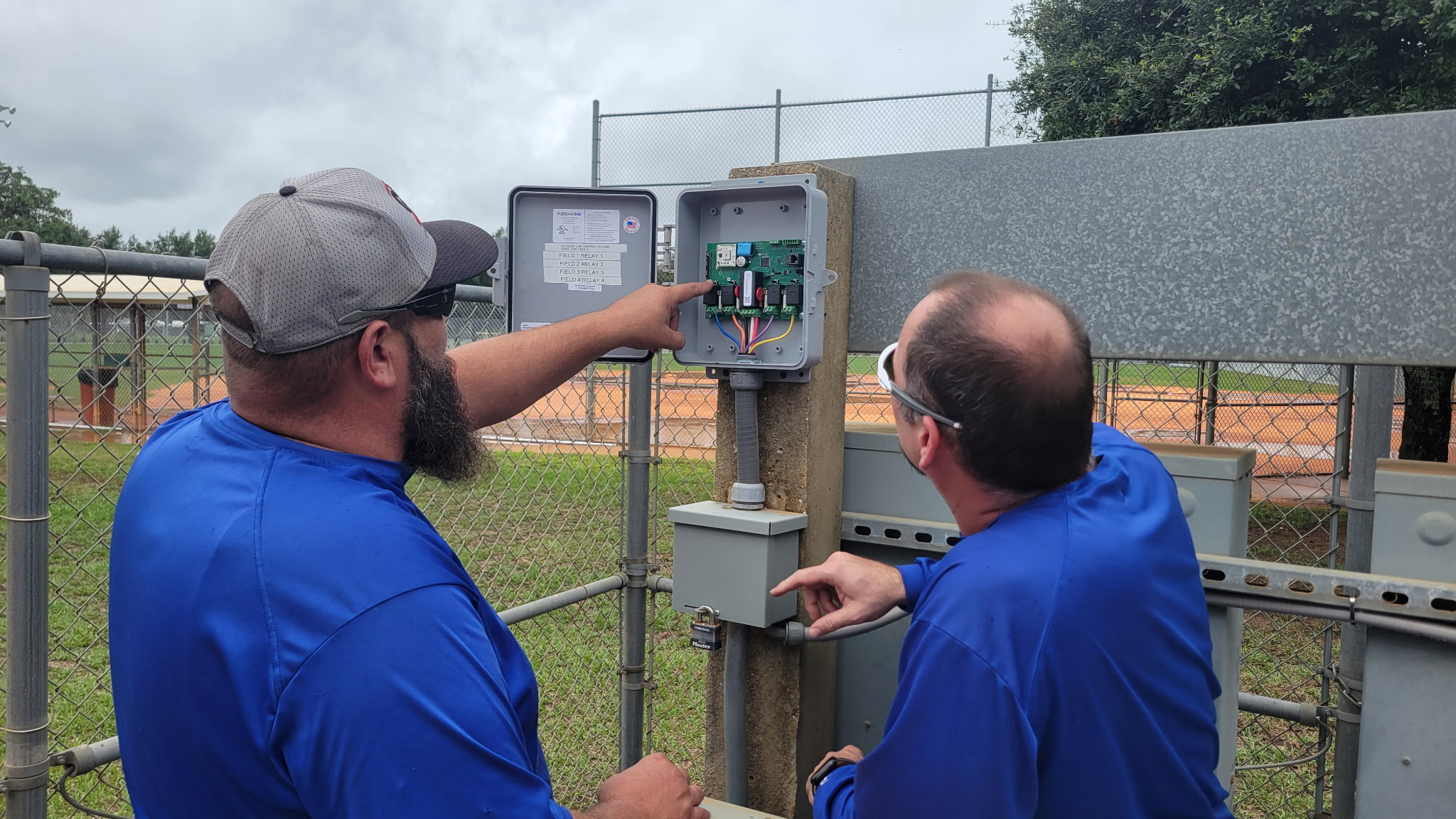
Every one of these problems has a dollar figure attached to it. Hillsborough County Parks and Recreation, which manages Florida’s largest sports field system, saw this firsthand. Before switching to remote lighting control, the county was losing thousands of dollars a month per park to unmanaged lighting.
What Changes with Remote Lighting Management
Outdoorlink’s Smart Controllers give parks and recreation departments centralized, remote control over field and facility lighting from a phone or computer. Instead of relying on someone driving to a site to turn lights on or off, staff and league representatives can schedule, monitor, and adjust lighting from anywhere.
That shift delivers a few core operational wins:
Individual user access. League representatives get their own login, so lights only run when a game or practice is actually scheduled. No more shared keys or unattended fields lit up at midnight.
Automated scheduling. Lighting schedules can be set by day, week, or month, and adjusted instantly for weather, cancellations, or Daylight Savings, with no site visit required.
Instant outage alerts. Departments know about power loss or equipment issues the moment they happen, often before a resident calls to complain.
Usage tracking. Every session is logged, giving departments real visibility into how facilities are actually being used.
The Numbers Behind the Savings
The financial case for remote lighting control is well documented across parks and recreation departments of every size.
Hillsborough County Parks and Recreation converted all 65 of its sports complexes to Outdoorlink controllers and now sees over $520,000 in combined annual savings, a 56 percent reduction in total lighting related costs across the county. Across the 31 league used sites alone, average annual savings run $325,000, more than covering the cost of the equipment and support each year.
Pasco County Parks, Recreation and Natural Resources installed Outdoorlink controllers at eleven sites to replace aging manual systems and reported the change as simple to operate and completely reliable, with strong support from the Outdoorlink team.
Smaller departments see the same pattern. In Boaz, Alabama, the Parks and Recreation Department used remote lighting control to eliminate the practice of neighbors flipping on ballfield lights after hours, ending years of noise complaints while cutting unnecessary energy use.
These are not isolated wins. From Cutler Bay, Florida to Flowood, Mississippi to Chanhassen, Minnesota, parks and recreation departments are reporting the same results: lower utility bills, fewer truck rolls, and far less time spent managing lighting manually.
Built for How Parks and Recreation Actually Operates
Outdoorlink’s Smart Controller platform was not designed for a single use case. The same system that manages athletic field lighting also controls building lights, gates, pumps, and other electrical equipment, all from one login. That means a department does not need three different systems to manage courts, fields, and facilities. One controller supports endless applications across a parks and recreation network.
This kind of centralized visibility also helps departments plan ahead. Usage data collected over time shows which fields are in high demand, where energy is being wasted, and where future investment should go. Instead of reacting to complaints or surprise utility bills, departments get ahead of the problem.
Reduce Costs Without Adding Complexity
Every parks and recreation department is under pressure to do more with tighter budgets. Remote lighting control is one of the clearest ways to protect that budget without asking staff to take on more manual work. It reduces energy waste, cuts down on site visits, and gives departments the kind of operational visibility that manual systems simply cannot provide.
Departments that have made the switch are not just saving money. They are gaining control over facilities that used to run on guesswork.
If your department is still managing field or facility lighting with keys, breakers, or timers, it is worth seeing what remote control could save. Request a demo or quote from Outdoorlink today and find out how much your parks and recreation department could save with smarter, centralized lighting control.