
Outdoorlink recently attended La FEDE Advertising Day in Granada, Spain, where conversations with media owners, operators, agencies, and technology providers highlighted a common theme: the continued growth of Digital Out-of-Home (DOOH) advertising across Latin America.
From Mexico and Brazil to Colombia, Chile, Argentina, and beyond, operators are expanding digital networks and looking for smarter ways to manage them. As a result, questions about IoT, remote monitoring, and digital billboard operations are becoming more common throughout the LATAM DOOH industry.
Here are some of the biggest questions shaping the future of digital out-of-home advertising in Latin America.
Why IoT Is Gaining Momentum in LATAM
Across Latin America, digital billboards, airport displays, transit media networks, and commercial digital signage continue to grow. While that expansion creates new revenue opportunities, it also introduces operational challenges.
Managing a handful of digital assets is one thing. Managing hundreds of screens across multiple cities, regions, or countries is another.
That’s why more operators are investing in IoT-enabled infrastructure and remote monitoring solutions.
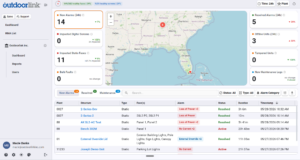
By connecting screens, controllers, power systems, and network equipment to a centralized platform, operators gain real-time visibility into network performance. Instead of discovering issues after a screen goes offline, they can identify and address potential problems sooner.
For growing LATAM DOOH networks, operational visibility is quickly becoming a competitive advantage.
The Biggest Questions Operators Are Asking
Can IoT actually reduce maintenance visits?
Yes.
One of the biggest benefits of remote monitoring for digital signage is the ability to diagnose issues before dispatching a technician. Connectivity interruptions, power failures, lighting issues, and hardware alerts can often be identified remotely.
This allows operators to make informed decisions, reduce unnecessary site visits, and allocate maintenance resources more effectively.
What should operators be monitoring first?
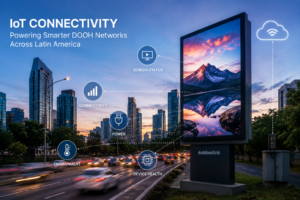
For most digital billboard and digital signage networks, the highest-priority metrics include:
- Screen online/offline status
- Network connectivity
- Power conditions
- Device health
- Environmental alerts
- Playback verification
These insights help operators identify issues before they impact advertisers, campaigns, or revenue.
Is IoT only useful for billboards?
Not at all.
Across Latin America, connected infrastructure is being deployed in airports, transit systems, retail media networks, smart city environments, and commercial digital signage installations.
Any organization operating digital screens can benefit from improved network visibility and digital signage monitoring.
How does IoT support programmatic DOOH?
Programmatic DOOH depends on reliable inventory and consistent uptime.
If a screen is unavailable or experiencing technical issues, campaign delivery can be affected. Remote monitoring helps operators maintain healthier networks, improve reliability, and provide greater confidence in digital inventory performance.
As programmatic DOOH adoption continues to grow throughout Latin America, infrastructure reliability will become even more important.
How Smarter Infrastructure Supports Growth
One of the strongest themes that emerged during discussions in Granada was the relationship between growth and complexity.
As operators add more screens and enter new markets, maintaining visibility becomes increasingly challenging. Teams are often asked to manage larger networks without significantly increasing operational resources.
This is where smarter infrastructure makes a difference.
Instead of relying solely on manual checks and reactive maintenance, operators can monitor network health from a centralized platform, receive alerts when issues occur, and prioritize resources where they are needed most.
The result is improved uptime, reduced downtime, faster response times, and more efficient operations.
Outdoorlink helps operators gain visibility into their digital infrastructure through remote monitoring, real-time alerts, and centralized network management tools designed to support growing DOOH networks. Whether managing roadside billboards, airport displays, transit media, or commercial digital signage, operators need the ability to understand what’s happening across their network at any given moment.
What Comes Next
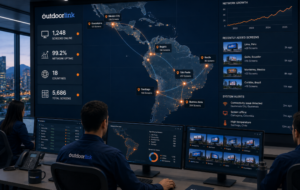
The future of LATAM DOOH is increasingly connected.
As digital out-of-home advertising continues to expand across Mexico, Brazil, Colombia, Chile, Argentina, and other emerging markets, operators will need tools that simplify operations, improve reliability, and support long-term growth.
The goal isn’t simply collecting more data.
It’s creating actionable insights that help operators reduce downtime, improve performance, and scale with confidence.
The future isn’t more truck rolls.
It’s smarter infrastructure.