
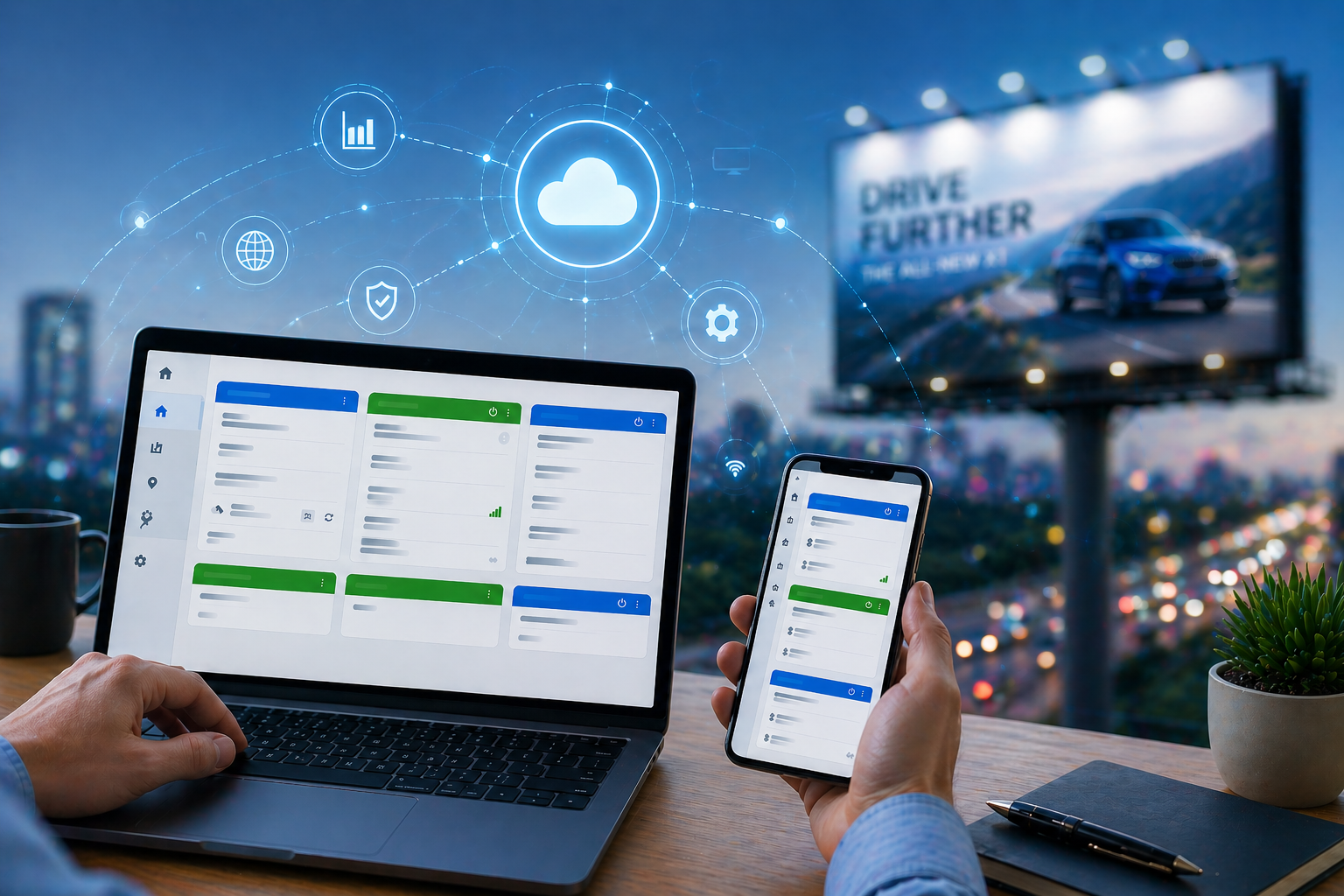
Remote Ops Training for Billboard Lighting Teams
Field teams did not sign up for long night drives and reactive work. When their time is spent chasing outages, logging issues, and driving through storms, it impacts everything from safety to morale to margins.
Remote operations change that. With a modern monitoring system and remote lighting control, you gain real-time visibility, reduce unnecessary site visits, and shift crews toward work that actually requires their expertise. The challenge is not the technology. It is helping your team adopt a new way of working.

Stop Chasing the Dark and Start Running Remote
Most operations still rely on manual night checks. Crews drive routes, document what is dark, and follow up the next day. During storm seasons, this becomes unsustainable.
A remote setup changes the workflow. Assets report their own issues. Power can be cycled remotely. Night drives become the exception instead of the routine.
The goal is not just implementation. It is building trust in the system so teams rely on it with confidence.
Redefining the Role of Field Teams
Remote operations shift field teams from being constant checkers to focused problem solvers. Instead of reacting in the dark, they work from real data and clear priorities.
The work becomes more intentional. Less time is spent driving. More time is spent fixing real issues. Schedules become more predictable, and safety improves significantly.
This is not a reduction in value. It is an elevation of the role. Teams move from manual labor to operational control, making informed decisions based on system insights.
Training That Starts Where Your Team Is
Adoption starts by showing teams how their current workflow evolves.
Instead of checking every structure, they respond to alerts. Instead of guessing, they verify remotely. Instead of paper logs, they work from digital records.
Training should be practical and role-based. Teams need to understand how to read alerts, take action, and document outcomes in a way that replaces old habits without friction.
When teams see how their daily workload improves, adoption becomes much easier.
Change Management That Actually Works
Shifting to remote operations requires more than a rollout. It needs structure.
Start with a pilot group and involve trusted team members early. Let them test the process, provide feedback, and help refine how it works in real conditions.
Communicate clearly why the shift matters. Fewer night checks, better uptime, and more sustainable workloads are outcomes teams care about.
As early wins build, momentum follows.
SOPs That Support Real Decisions
Effective SOPs remove guesswork. When an issue is flagged, teams should know exactly what to do next.
Clear workflows for verifying issues, deciding when to dispatch, and handling repeat problems ensure consistency across the network. Everything should be accessible in the field and easy to follow in real time.
Strong SOPs turn remote monitoring into a system teams can rely on, not just another tool.
Using Data to Improve Operations
Once remote operations are in place, visibility increases across the entire network.
Patterns start to emerge. Recurring issues, response times, and operational gaps become easier to identify and fix. Just as important, feedback from field teams helps refine processes based on real experience.
When teams see problems being solved faster and unnecessary work being reduced, confidence in the system grows.

Taking the First Step
Transitioning away from manual checks does not require a full overhaul. Start with a focused pilot. Track improvements in uptime, response time, and site visits.
With the right approach, remote monitoring becomes more than a tool. It becomes part of how your operation runs.
Take Control of Your Network
Gain real-time visibility across your inventory and reduce unnecessary truck rolls with a smarter monitoring system. Outdoorlink helps you improve uptime, streamline operations, and keep your network performing as it should.