

It Starts with Visibility
Every asset you operate whether it’s a billboard, a transit display, or street-level digital is expected to perform. It’s expected to be on, visible, and delivering value at all times.
But performance only matters if you can actually see it.
Without real visibility, operators are relying on assumptions. Systems may show assets as “online,” but that doesn’t mean they’re functioning correctly. Screens go dark. Content freezes. Power fluctuates. And too often, those issues aren’t discovered until after revenue has already been impacted.
Remote monitoring changes that. It replaces assumption with awareness.
The Cost of Not Knowing
The biggest cost in any network isn’t always the failure itself, it’s the delay in finding it.
When an issue goes unnoticed for hours or days, the impact compounds. Lost impressions. Missed delivery. Make-goods. Operational disruption.
Across a single asset, that may seem manageable. Across an entire network, it becomes a consistent and often invisible drain on performance and revenue.
And in multi-market or international operations, the challenge grows. Time zones, distributed teams, and varying infrastructure make it even easier for issues to go undetected.
What you don’t see is what costs you the most.
Where the ROI Actually Shows Up
The return on remote monitoring isn’t tied to one single metric it shows up across your entire operation.
Downtime is reduced because issues are identified immediately, often before full failure occurs. Maintenance becomes more efficient because teams know what they’re walking into before they arrive. Many issues can be resolved remotely, eliminating unnecessary dispatches.
Assets last longer because stress signals like heat, power irregularities, or performance drops are caught early instead of after damage is done.
And perhaps most importantly, revenue is protected. Campaigns stay live. Delivery stays consistent. Clients stay confident.
Each of these outcomes contributes to ROI. Together, they redefine how efficiently a network operates.
Fewer Surprises, Faster Decisions
Without monitoring, most operations are reactive.
A problem is discovered.
A team is dispatched. A fix is determined on-site.
With remote monitoring, that process is compressed.
Issues are flagged in real time.
Root causes are often identified before a technician is involved.
Decisions can be made faster, and actions can be more targeted.
Instead of reacting to problems, operators are managing them.
This Is Where the Return Becomes Clear
The return on remote monitoring isn’t theoretical. It shows up in real, measurable ways.
Less downtime.
Fewer emergency dispatches. Lower maintenance costs.
Longer asset life.
Stronger client relationships.
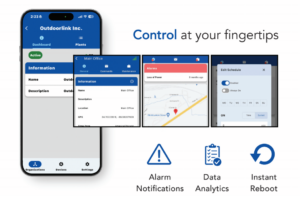
But more than anything, it gives operators control over their network, their performance, and their revenue.
Because in any environment local or global the equation is the same:
If you can’t see what’s happening, you can’t protect what you’ve sold.
And the operators who can see their networks clearly are the ones seeing the strongest returns.