

Think about a busy evening commute in late winter. The sky is dark before most people leave the office. Headlights shine, taillights glow, and your billboards sit right in the middle of it all. If a face is dark or flickering, it may as well not exist.
Outdated billboard lighting management often hides in plain sight. You feel it as:
- Missed ad views during prime evening and early morning drive times
- Extra emergency service calls when something fails without warning
- Frustrated advertisers who expected consistent visibility and results
Those problems quietly drain budgets and time. When lighting is handled with old hardware and manual habits, you are always reacting. You find out about issues late, you fix them slowly, and you hope they do not happen again on the next campaign cycle.
At Outdoorlink, we focus on helping operators move away from that guesswork. We build smart, remote management tools so you can see issues early, act faster, and keep your boards shining when they matter most.
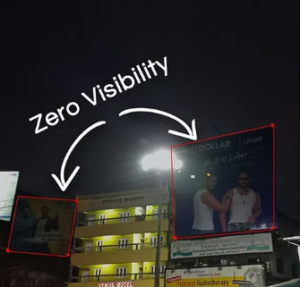
When Your Customers Notice Lighting Issues Before You
One of the strongest warning signs is who spots problems first. If your phone only rings at night when someone complains, your process is backwards.
Common red flags include:
- Advertisers, sales reps, or property owners calling about dark faces
- Tenants sending photos of unlit boards during evening drive times
- Operations teams hearing about issues days after they started
When your buyers and local contacts act as your monitoring system, you are stuck in a reactive loop. It is stressful for your team and nerve‑wracking for clients.
To avoid that, many operators still run manual night drives or early morning spot checks. During late winter, that can mean:
- Driving long routes in the dark or in bad weather
- Paying overtime for staff to check boards in person
- Missing intermittent issues that only show up some nights
Beyond the cost and safety risk, this method rarely catches every problem. Slow response times lead to make‑goods and harder renewal talks. In tight local markets, the operator who can keep lights on reliably, and prove it, quickly looks like the safer choice.
Costs and Outages You Cannot Explain
Another warning sign is when your costs keep rising but your visibility does not improve. If you are rolling trucks for small, repeat issues, something deeper is off.
Watch for:
- Frequent site visits just to reset breakers or check timers
- Crews sent out to confirm if lights are on or off
- Long travel time for simple checks that could be done remotely
Each visit eats into fuel, vehicle wear, and labor hours. During darker months, when outages hurt more, those visits often happen outside normal hours, which strains your team.
Utility bills can also tell a story. Old timers, drifting photocells, and mismatched schedules can leave lights running too long, turning on in daylight or shutting off too early. Without real‑time insight, it is hard to:
- Match lighting schedules to actual sunrise and sunset
- Spot faces that are burning power at the wrong times
- Catch strange usage patterns before they become big problems
Then there are the “mystery outages.” Lights out in one area but not another, or boards that fail some nights and work fine when a tech arrives. Without remote diagnostics and alerts, teams guess. Parts get swapped, trips repeat, and root causes stay hidden.
Too Much Hands‑On Work for a Remote Asset
Billboards are, by nature, remote. If your lighting still demands hands‑on care at each structure, that is a clear sign the system has not kept up.
A few common issues:
- Crews visiting every site to adjust timers for seasonal time changes
- Field techs setting up photocells and timers in different ways at each board
- No standard process across markets, which makes training and support harder
This kind of setup makes every face a one‑off project. When something goes wrong, techs have to relearn the site before they can even start to fix it.
Another signal is the lack of centralized visibility. Ask yourself:
- Can we see from one screen which boards are on or off right now?
- Can we spot problem locations at a glance, before someone calls us?
- Can we change a lighting schedule without sending a truck?
Modern billboard lighting management means you can switch, reset, or adjust devices across the network from a single dashboard. Lighting should not sit off on its own either. When it is connected with other outdoor and commercial assets, it is easier to link lighting events to structures, campaigns, and maintenance tasks.
Data Blind Spots That Hide Revenue and Risk
If your only “record” of lighting performance is memory and a few emails, you are working in the dark in more ways than one. Data does not just help with tech work, it also supports sales and operations.
Without historical logs, it is tough to:
- Prove uptime when advertisers ask how often their boards were lit
- Review past alerts to understand patterns across seasons
- Back up decisions about make‑goods or credits
Advertisers are asking stronger questions about performance, especially for high‑value or time‑sensitive campaigns. They want proof that their faces were visible when they needed to be. Modern systems can capture:
- On and off times for each circuit or face
- Event histories for outages, resets, and schedule changes
- Reports that support service level style promises
Data also opens the door to smarter scheduling. When you can see real usage over time, you can adjust on and off times around sunrise and sunset, test small energy‑saving changes, and react quickly as days grow longer from late winter into spring. You keep visibility high while trimming waste.
Bringing Your Billboard Lighting Into the Modern Era
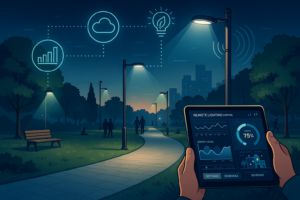
For many operators, the first big shift is moving from “we fix it when someone calls” to “we know the problem before anyone notices.” IoT hardware paired with cloud software makes it possible to:
- Monitor every lit faces in real time
- Get instant alerts when status changes or faults occur
- Fix many issues with a remote reset instead of a truck roll
This does more than protect circuits. It protects impressions, strengthens advertiser trust, and keeps late‑winter and early‑spring campaigns running smoothly.
When lighting is managed as a measurable, optimized asset, it supports the whole business. Operators gain:
- Lower operating strain from fewer site visits
- Higher uptime and more consistent campaign delivery
- Better reporting for both internal teams and advertisers
- A system that can grow without adding more manual work
A simple internal review can show where you stand. How often are you relying on customer complaints? How many night drives happen each month? Do you have a live view of your network health and lighting performance? At Outdoorlink, we built our remote management solutions to answer those exact questions, helping operators bring lighting, signage, and other outdoor assets into one smarter, more reliable system.
Optimize Lighting And Cut Costs
If you are ready to reduce wasted energy, improve uptime, and gain real visibility into your billboard network, our billboard lighting management solutions can help. At Outdoorlink, we work with you to streamline control and monitoring so your team spends less time troubleshooting in the field. Tell us about your locations and goals, and we will recommend a setup that fits your operations and budget. Have specific questions or a complex portfolio to manage? Simply contact us to get started.