
How smarter lighting helps Parks & Rec teams operate with confidence
Parks are where communities gather, connect, and spend time outdoors. And as expectations for these spaces grow, so does the need for reliable infrastructure, especially lighting.
Because when lighting fails, it’s not just an inconvenience.
It impacts safety, usability, and public trust.
That’s why more municipalities are moving toward smarter, more connected lighting systems.
Lighting Is No Longer “Set It and Forget It”
Traditionally, park lighting has been reactive.
Lights are scheduled and maintained as issues arise, but without real-time visibility, problems often go unnoticed until they’re reported or become safety concerns.
For teams managing multiple parks, staying ahead of it all can be a challenge.
The Shift to Smart Parks
Smart parks take a more proactive approach.
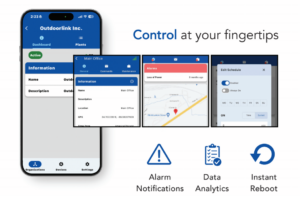
Connected systems allow teams to monitor and manage lighting in real time adjusting schedules, identifying outages instantly, and reducing unnecessary site visits.
It’s not about adding complexity.
It’s about gaining control.
Better Visibility, Better Operations
When you can see what’s happening across your network, decision-making improves.
Instead of relying on manual checks, Parks & Rec teams can respond faster, reduce disruptions, and use staff time more efficiently.
That visibility leads to smoother operations and fewer surprises.
Lower Costs, Smarter Efficiency
Smart lighting goes beyond energy savings.
With better control, teams can reduce unnecessary runtime, extend equipment life, and cut down on maintenance visits.
The result is lower operational costs without sacrificing performance.
Safer Spaces for the Community
Lighting plays a key role in how safe a park feels.
Well-lit spaces encourage use and help communities feel secure. With real-time monitoring, outages are resolved faster, reducing the time areas are left in the dark.
That responsiveness makes a difference.
Why It Matters Now
Municipal lighting is evolving.
What was once manual and reactive is becoming connected, visible, and controllable in real time.
For Parks & Rec teams, that means:
- More efficient operations
- Lower costs
- Safer, more reliable spaces
And ultimately, parks that better serve the community.